

'Groundhog day' comparison over road salting complaints
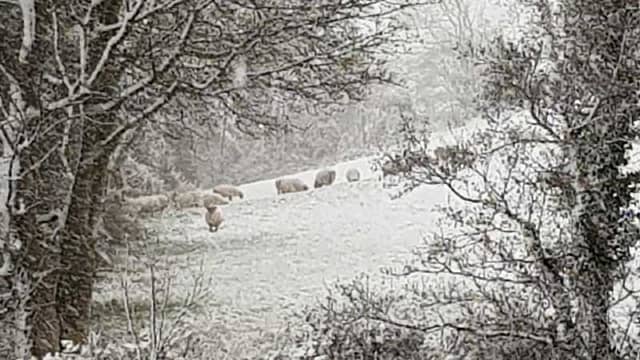

ARMAGH City, Banbridge and Craigavon Borough Council is to invite the Department for Infrastructure’s permanent secretary to discuss councillors frustrations and concerns about the gritting of rural roads. Such is the level of frustration amongst local representatives at what they perceive to be DfI Roads’ unwillingness to act on their concerns that once local councillor described the situation as “groundhog day”.
ARMAGH City, Banbridge and Craigavon Borough Council is to invite the Department for Infrastructure’s permanent secretary to discuss councillors frustrations and concerns about the gritting of rural roads.
Such is the level of frustration amongst local representatives at what they perceive to be DfI Roads’ unwillingness to act on their concerns that once local councillor described the situation as “groundhog day”.
At Council’s monthly meeting on Monday, January 30, members attention was drawn to a letter from DfI’s divisional roads manager, Mark McPeak in relation to the department’s winter gritting policy.
It refers to previous correspondance sent by Mr McPeak on April 1 that sets out the department’s current position on the gritting of rural roads.
It explains that for a road to be included in the winter gritting schedule it should be a through route carrying more than 1,500 vehicles per day or a through route carrying 1,000 vehicles with special difficulties such as severity, frequency and extent of gradient.
It then goes on to explain the decision is not to treat roads with a lower volume of traffic is not purely about finances and resources.
“Where there are low volumes of traffic, spreading salt on its own provides little benefit or at least takes a considerable length of time to become effective,” it states.
“As a result, the application of salt on low traffic roads can be counterproductive when it comes to road safety since it can create a false sense of security for road users.
“On roads which do not qualify for inclusion on the winter gritting schedule but have gradients greater than five per cent and where no reasonable alternative route is available, the department provides grit piles for use by the public, on a self-help basis.”
In concluson Mr McPeak states “there are currently no plans to review the department’s policy in respect of treating additional rural routes”.
Council’s Deputy Lord Mayor, Councillor Tim McClelland told the chamber the response left him wondering if “DfI really get” the issue at hand and highlighted problems faced by those parents who have to do the school run because buses aren’t running and those whose carers cannot get to their homes.
“If the school bus doesn’t run, that immediately means disruption in the work life of one or both of the parents,” he said.
“Also, if we have constituents who require health care, if you have a road like a bottle there is no access for the care worker.
“Mr McPeak also mentioned the grit piles, well last week I had quite a few constituents raising the issue that they could not get access toa grit pile as it was frozen solid.
“Really there is nothing as bad as a grit pile you don’t have access to because there has been a frost.
“You could not make that one up, I suppose to conclude the response is not good enough because rural dwellers in areas right across this borough are getting short changed.
“It is just not on.”
SDLP group leader, Councillor Thomas O’Hanlon said that local officers will implement regional policy and called for Council’s response to be sent to the department’s permanent secretary, Julie Harrison, as well.
“Our letter went locally, can I suggest it is now forwarded to the permanent secretary. It is a regional policy and with all due respect local officers are only implementing regional policy,” he said.
“I think we should send it up to the permanent secretary and ask that the whole issue is reviewed.”
Councillor Sam Nicholson described the response as a “bit like groundhog day” and told the chamber he was in full agreement with Cllr O’Hanlon.
“You can see clearly that we have to escalate this, there is no point writing to the divisional officer anymore so I would happily support writing to the permanent secretary,” he said.
“Rural areas, even within our urban areas, are not being gritted. Councillor Gráinne O’Neill and myself got an email fromthe headmaster of a school in the middle of Armagh to say school buses could not get up the hill.
“It is a massive problem throughout our area. Something needs to be done.”
Councillor Kyle Savage said he would second Cllr O’Hanlon’s proposal to write to DfI’s permanent secretary and asked that Ms Harrison be invited to address Council on this matter.
Council’s Lord Mayor, Councillor Paul Greenfield confirmed he would include an invitation to appear before Council in his letter to Ms Harrison before Alderman Sydney Anderson told the chamber it is clear from the responses so far that councillors “are not being listened to” by DfI.
“We listen to DfI when they come to this chamber telling us everything is great but you know, experience shows we are not being listened toand really, there is no level accountability for people that just do not want to know,” he said.
“I would certainly agree we need to get the permanent secretary in front of us.”