

Project is a touch of heaven
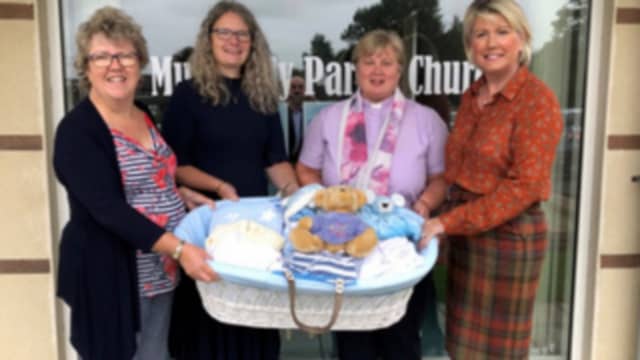
A MULLAVILLY-based project is providing much-needed support for new mums and babies. As its name suggests, Apple Blossom Baby Basics is a County Armagh initiative. More precisely, its home is Mullavilly Parish Church where the Rector is Venerable Elizabeth Cairns.
A MULLAVILLY-based project is providing much-needed support for new mums and babies.
As its name suggests, Apple Blossom Baby Basics is a County Armagh initiative. More precisely, its home is Mullavilly Parish Church where the Rector is Venerable Elizabeth Cairns.
But while it is, of course, supported by parishioners, the network and its impact extends quite a bit beyond Laurelvale.
With more people struggling and winter closing in, demand for help is growing. Last year Apple Blossom Baby Basics had just short of 25 referrals. This year – with the winter months of November and December still to come – they have had 49. They include a couple of Ukrainian families.
“These people have had to flee their homes, so they arrived with absolutely nothing,” the Mullavilly Rector said
Explaining the group’s origins and ethos, she continued, “Baby Basics really started in 2018/18. We knew there was a need in the wider area for mums who, through no fault of their own, found themselves in a situation where they didn’t have the basics for their baby.
“They may have lost their job. Or there's no longer any partner around. Things like that mean they just don’t have the means to come up with the basics for themselves.”
Baby Basics comes under the umbrella of a parent organisation; Apple Blossom is simply an add-on to give the project hereabouts a local identity.
The Rector continued, “We work specifically through the health professionals – doctors, nurses, health visitors, midwives, district nurses, social workers and so on. It took a wee while for us to get that information out and for them to see what we do. But now we’re getting more and more referrals from them because they now know what we’re about.”
Asked how the system works, she said, “For example, a social worker is working with a family and they see a particular need. They then contact us to let us know that ‘Mum is due a baby’ or ‘Mum has just had a baby’.
“If the baby hasn’t yet been born, but they know if it’s going to be a boy or a girl, we can tailor our help to the particular circumstances, whatever those happen to be.
“Usually we’ll be told a baby basket is needed so that the baby has somewhere to sleep. Or they need a baby bath. Or both. We then fill the basket and the bath full of items a new mum would need – nappies, wipes, baby wash, baby-grows, baby vests, towels, blankets, knitted cardigans, knitted hats and so on. And when I say nappies, I’m talking about enough to keep them going for a couple of weeks.
“We’ll also put together a small pack for the mum – toiletries, shower gel, shampoo, creams, personal care items. And if dad’s part of the family, we’ll include one or two small items for him as well.
“Then we contact the health professional, let them know the basket’s ready, they come and collect it and off it goes to be delivered.
“So we never actually get to meet the person who is receiving the basket. Nor do we ever ask for a name. The health professional can put the name on a little form, if they wish, but I think that’s probably more for their own records than anything else.
“We work through the health professionals all the time because they know who is in the greatest need. This isn’t a situation where somebody can arrive at our door and say, ‘I need one of your baskets’. If we operated like that, we’d have no control over where baskets were going, or why.”
There are also referrals from local church ministers and organisations like Mothers’ Union, members of which may be aware of a neighbour in their area who may need help.
Asked if the items which fill the baby baskets and/or baths are donated as a result of the generosity of her own congregation, she replied, “Yes and no. When we first started this it was because we were thinking, ‘What can we do as a means of outreach, to our local community and the wider area as well?’
“For something like that to work, we realised we needed to tap into other places that could help us – for example, the local primary schools. So we sent a wee note out to them, once a year, suggesting that if everybody in P1 could bring us one packet of wipes and everybody in P7 brought a bottle of baby shampoo, that would mean we weren’t getting 100 of the same thing.
“So local schools have been involved, as have local churches through their Mothers’ Unions, ladies’ groups or craft groups. They have been knitting away at little blankets or cardigans. And maybe they'll also provide some toiletry items, for example.”
She continued, “Through their various groups they’ll do a collection, say once a year, and then they'll contact us and we'll either go and collect what they have or else they'll deliver it to us.
“It’s church putting their words into action. And because we never know who’s going to get a basket from us, the only other thing we ever put into the basket is a little card which simply says, ‘You are fearfully and wonderfully made’.”
That’s a quote from Psalm 139, just to let the mum who receives all these items know that she, and her baby, not only are valued but are in somebody else’s thoughts, too.
“The reason we don’t ask for a name - and the recipient doesn't necessarily know who we are, either – is that we give expecting nothing in return.
“We don't want anyone feeling that they owe us something, or that they’re a ‘charity case’ as a result of having received something from us. It’s simply a matter of us giving them something that will help them.”
She also highlighted others’ generosity by saying, “Some of the baskets we’re given will have been pre-owned. But they are meticulously cleaned before they go out for somebody else to use.
“And we ourselves do some fundraising in order to buy a new mattress in every case'.
“And when we’re given donations of second-hand baby clothes, if there is a mark on anything it goes straight to the bin. Every donated item is washed, dried, pressed and folded properly. We never ever send anything out that we would class as being below standard.
“In other words, it's done to the very best of our ability.”
She also stressed that, under law, they are prohibited from giving out foodstuffs – baby milk or formula, for instance.
In closing, the Rector said, “Basically it comes down to whatever we can do to help, we'll do it if it’s possible.
“And obviously this couldn’t happen without our great team of volunteers who receive the referrals, pack the baskets, sort the clothes and items, as well as those who volunteer to wash, iron and fold all the baby clothes. Without them, none of this would be possible.”